Cloudy, Rusty, Pink or Spotted: Elgin Tap Water Signs Explained
Most water worries start with something seen or smelled, not with a hardness number. The City of Elgin answers several of these itself. Here is what each sign usually means, and whether a softener has anything to do with it.
Most Elgin tap water signs are not hardness. Milky water is usually dissolved air; sudden rust follows main work nearby; pink film is airborne bacteria; a chlorine smell is the disinfectant. Spots and scale are the moderate 7.9-grain hardness the city leaves, and only those respond to a softener.
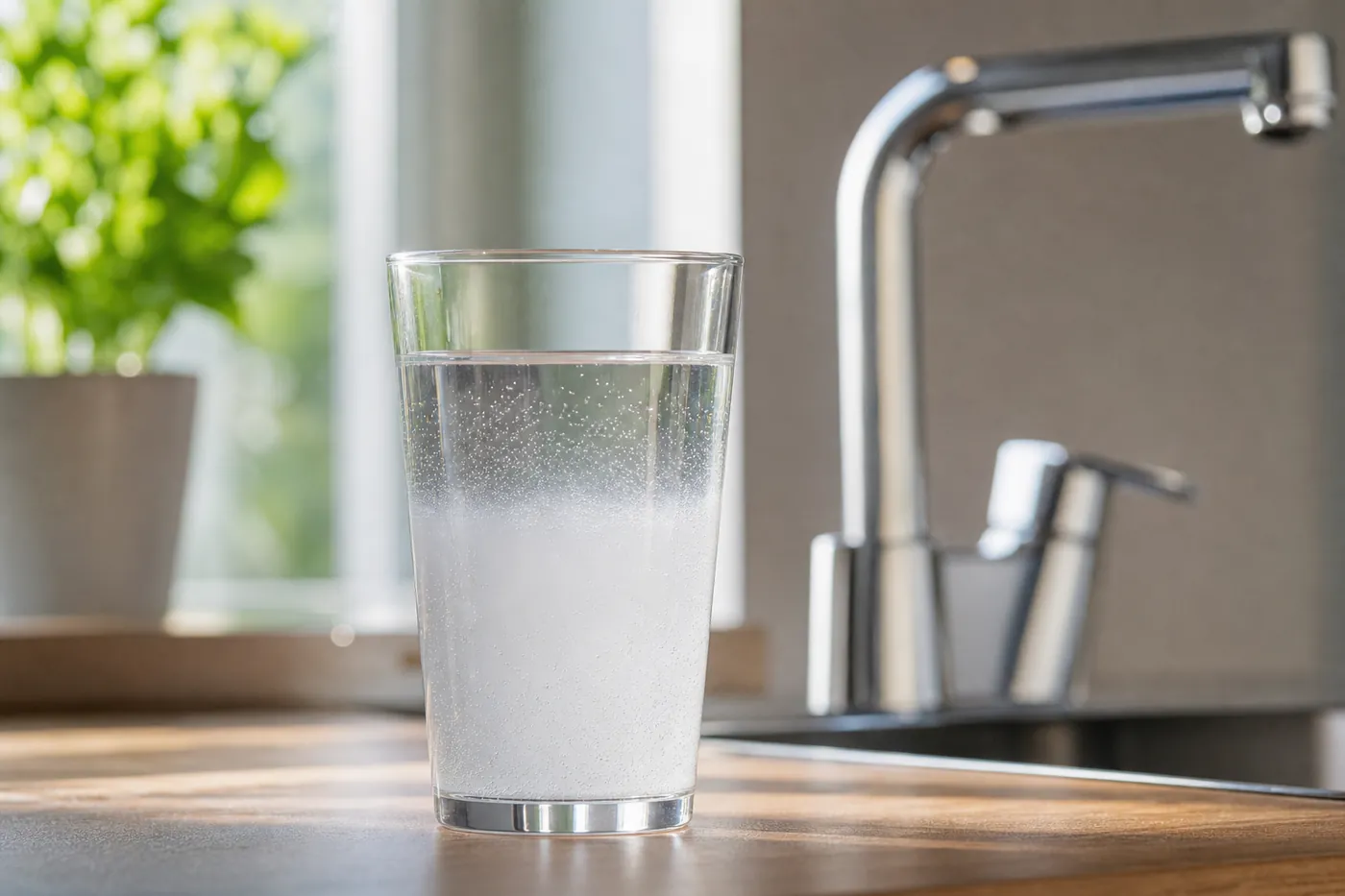
Why is my water cloudy or milky?
Usually dissolved air. The City of Elgin says that if a glass clears from the bottom up, it is air, which happens more often when the water is cold, and it is harmless. Cloudiness that does not clear is worth reporting to the city's water quality laboratory.
My cold water suddenly turned rusty
The city says sudden rusty cold water usually means a crew nearby is isolating a main or opening a hydrant, which stirs sediment, and that it clears on its own within a couple of hours. If it lasts longer, contact the city's water quality lab. A softener plays no part.
What is the pink film in the shower and toilet?
Airborne bacteria, according to the city, that thrive on moist surfaces and often show up after construction or with windows open. The city adds that removing chlorine with an activated carbon filter can make it worse. Clean with a chlorine-based cleaner; it is not a sign of hard or soft water.
Why does the tap smell of chlorine?
Disinfectant left in the water on purpose. Elgin's 2025 report lists chloramine at 2.7 to 3 ppm. The city suggests filling a pitcher and refrigerating it overnight to let the smell fade. A softener does not change it; a carbon filter does, at the cost of the pink-film trade-off above.
White spots, scale and stiff towels
That is hardness, the seven to eight grains the plant leaves in. It is moderate, so a rinse aid and vinegar often handle it. If it still bothers you, a softener set near that number, or one that treats only hot water, is the fix; see setting up a softener.
Low pressure and white or gray specks
The city suggests removing the faucet aerator and looking at the debris. White, gray or light-green eggshell-like pieces that float are likely bits of a water heater dip tube, a known defect in heaters made from 1993 to 1997, and a plumber's job. Low pressure all over the house is a matter for the city's meter division.
My softened water tastes salty or leaves blue-green stains
Salty taste can mean the softener is over-brining or not rinsing; HomeGuide puts repairs at $150–$600. Blue-green stains suggest copper corrosion, which the city links to water softened beyond its own treatment. Check the setting and read softened water and lead pipes.
Describe the water at your house
Write a line or two: city water or a well, the age of the house, a softener that misbehaves, or a worry about old pipes. One independent water treatment specialist who works around Elgin will get in touch.