Well Water and Village Systems Around Elgin: Softener or More?
A well water softener is a different purchase from a softener on Elgin mains. Outside the city system, nobody has softened the water for you, and hardness is only one of the things worth testing.
If your bill does not come from the City of Elgin, its 7.9-grain figure does not apply. The Illinois Department of Public Health calls water over 200 mg/L (12 grains) hard. Test first through an Illinois EPA accredited lab. HomeGuide (2026) puts a well softener or an iron filter at $1,000–$3,500 installed.
Is your water the city's?
Check the water bill. Elgin serves its own customers and sells water to the Village of Sleepy Hollow (City of Elgin). Neighboring towns run their own systems. South Elgin, for example, says it draws its water from wells in three different aquifers with a mix of treatment, and that blending can make quality inconsistent. Rural Kane County homes are often on private wells, which no utility tests.
What should a well test include?
Hardness, iron and manganese for the softener decision, plus the basics for safety. The Illinois Department of Public Health's private water page links the Illinois EPA list of accredited laboratories for well water testing. Its hardness scale runs: 0 to 100 mg/L soft, 100 to 200 moderate, 200 to 300 hard, 300 to 500 very hard, and 500 to 1,000 extremely hard. IDPH also notes that a zeolite (ion exchange) softener removes only calcium, magnesium and small amounts of iron, so higher iron needs its own filter ahead of the softener.
What changed in South Elgin?
South Elgin reported in April 2021 that its shallow wells contained trace PFAS and PFOA. Its roughly $10 million project replaces a water tower and adds a new well about 1,800 feet deep, with drilling scheduled from late August 2026; once it runs, the village plans to abandon the shallow wells and expects better water with lower corrosivity (Village of South Elgin). Homeowners there should re-check hardness once the supply changes before resizing or replacing a softener. A softener does not remove PFAS; reverse osmosis certified for those compounds is the usual tool.
Sizing for harder water
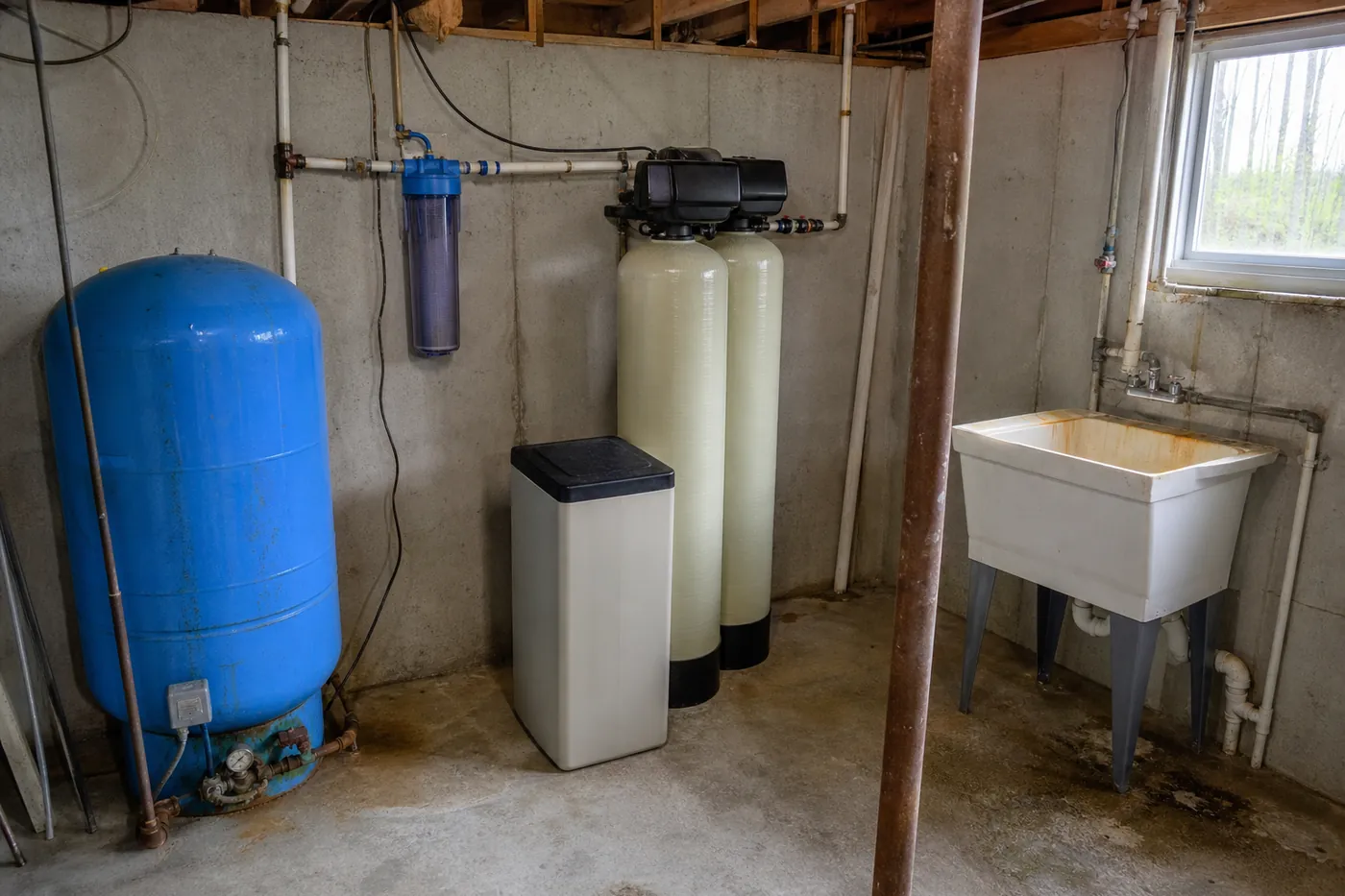
Hardness drives capacity. At 20 grains, a household uses two and a half times the softening it would on Elgin city water, so dual-tank units and higher salt use become more common. Fixr puts dual-tank installs at $1,500–$3,000. Compare well equipment against the Elgin softener price guide.
Questions homeowners ask
How often should I test a private well near Elgin?
Test before buying treatment, and again whenever taste, color or smell changes. The Illinois Department of Public Health's private water page points to the Illinois EPA's list of accredited labs. Ask the lab for hardness, iron and manganese along with bacteria and nitrate, so the softener and any filter can be sized from real numbers.
Describe the water at your house
Write a line or two: city water or a well, the age of the house, a softener that misbehaves, or a worry about old pipes. One independent water treatment specialist who works around Elgin will get in touch.