Softened Water and Lead Pipes in Older Elgin Homes
Softened water and lead pipes are a pairing Elgin's own water report singles out. Before adding a softener to an older house, it helps to know what the city found and what it recommends.
Elgin's 2025 report says water from a personal softener tends to be more corrosive than hard water, and that homes built before 1960 likely have lead service lines. It recommends a filter certified to NSF/ANSI 53 for lead plus NSF/ANSI 42 where lead plumbing is present. HomeGuide (2025) puts under-sink RO at $300–$950.
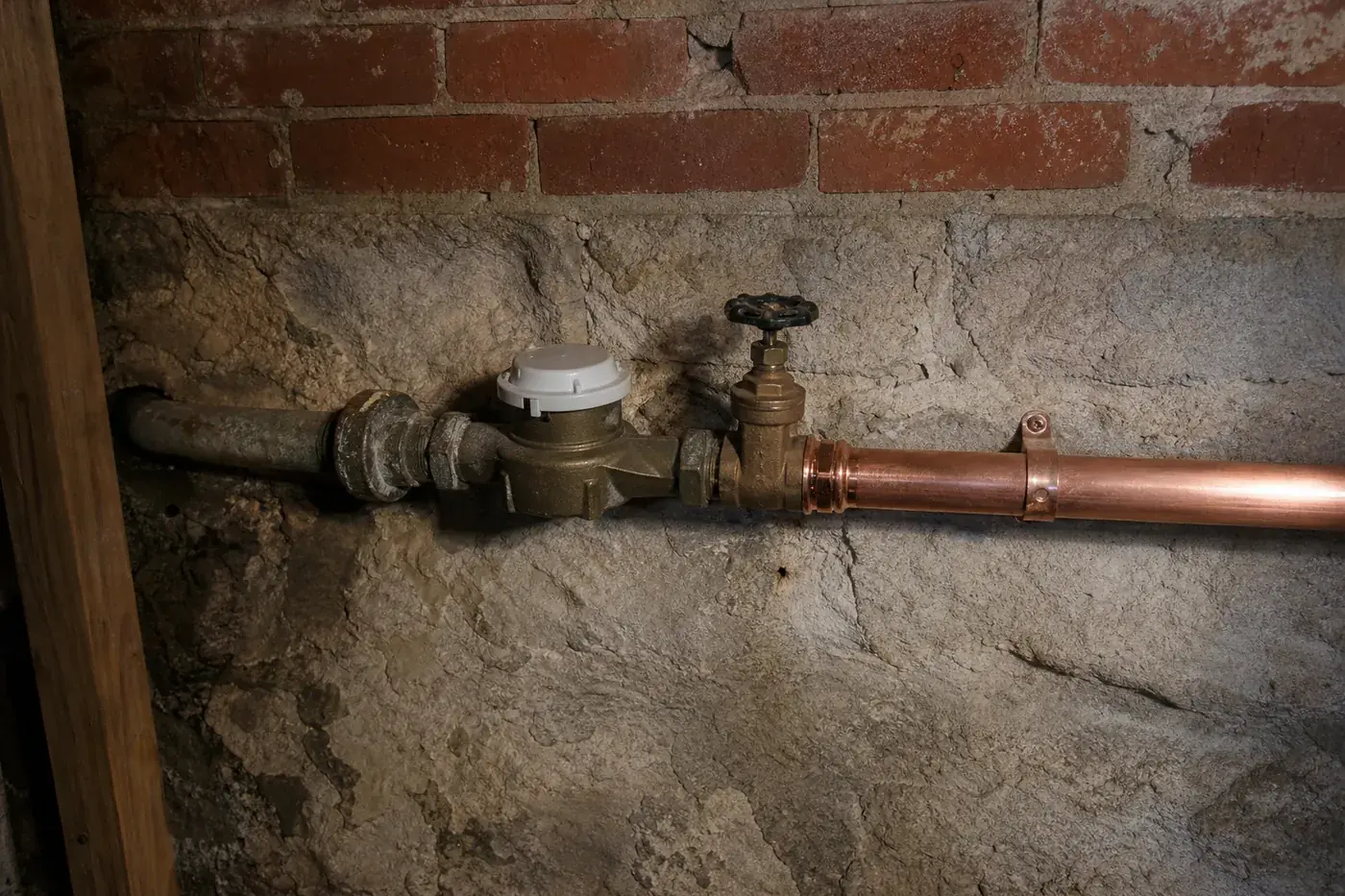
Why does softening matter for lead?
Lead in tap water comes from plumbing, not from the plant. Elgin's 2025 water quality report says the water it delivers contains no detectable lead, and that lead enters through corrosion of service lines, solder and brass fixtures, especially in hot water. The same report notes that water treated with a personal softener, being low in dissolved calcium and magnesium, tends to be more corrosive than hard water. The report describes the plant's treatment as adding calcium and magnesium and says this minimizes the corrosive nature of the water. Stripping them back out at home works against that.
What did the 2025 lead testing show?
The 2025 report lists a 90th-percentile lead result of 53 ppb against the 15 ppb action level, with 70 sampled sites above it, and lists no violation. Sampling under federal rules focuses on homes with lead service lines or lead solder, where the highest readings are expected (U.S. EPA). The U.S. EPA has published its own page on Elgin's drinking water describing its 2023 letters urging further action and the steps the state and city took, including notifying residents and providing filtration to the homes with the highest results. Elgin's lead response page lists replacement projects for 2025 and 2026.
What does the city recommend?
- Test. Elgin offers water testing and pitcher filter kits through its 120Water program to customers in buildings from before 1988, owners and renters alike.
- Filter drinking water. A filter certified to NSF/ANSI 42 and NSF/ANSI 53 for lead.
- Flush and use cold. Run water at least five minutes after hours of no use, and cook with cold water; boiling does not remove lead.
- Check the service line. The city's lead response page has a map of service line materials.
If you still want a softener in an older house
Set it near the city's seven to eight grains rather than lower, soften only the lines that need it, and keep a cold drinking tap on unsoftened water with a certified filter or an under-sink reverse osmosis unit. Ask the installer what they know about your service line before they start. Prices for each piece are in the water softener cost guide for Elgin.
Questions homeowners ask
Does a water softener remove lead?
It is not built for that. Elgin's own report goes further, warning that water from a home softener tends to be more corrosive than hard water. For lead, the city recommends a drinking water filter certified to NSF/ANSI 53, alongside NSF/ANSI 42, plus flushing and using cold water for cooking.
Describe the water at your house
Write a line or two: city water or a well, the age of the house, a softener that misbehaves, or a worry about old pipes. One independent water treatment specialist who works around Elgin will get in touch.